Last updated: November 17, 2026. ROI figures sourced from the National Association of Realtors 2025 Remodeling Impact Report (swimming pool figure from NAR's 2018 Remodeling Impact Report), FMLS comps, and Team Haigh's 360-plus transactions across NW Metro Atlanta.
Every seller we meet asks us the same question: "What should I do to my home before I sell it?" And the answer is never as simple as "remodel the kitchen" or "replace the floors." The real answer depends on your specific home, your specific market, and your specific budget. Some upgrades return more than they cost. Others barely make a dent in your sale price.
We have helped more than 360 families sell their homes across Cobb, Paulding, Cherokee, and Bartow counties. We have seen what works and what does not. This guide is the honest, data-backed answer to that question based on what is actually moving the needle in the NW Metro Atlanta market in 2026.
Not every improvement is worth your time or money. Some upgrades recover nearly all of their cost, while others barely return 43 percent. The difference between a smart investment and a wasted one comes down to knowing your market, your price range, and what buyers in your specific neighborhood actually value. Let us break it all down.
ROI at a Glance: What the Data Says
Before we walk through each project, here is the full picture in one table. These are the single, sourced cost-recovery figures from the National Association of Realtors Remodeling Impact Report: the share of each project's cost typically recovered at resale. Every figure comes from the report's 2025 edition except the swimming pool figure, which comes from the report's 2018 edition, because the 2025 report does not list pools among its top cost-recovery projects. We use these figures because they are the industry's most reliable measure of remodeling ROI, and we have watched them play out across our own 360-plus transactions in NW Metro Atlanta.
| Project | Cost Recovery at Resale |
|---|---|
| Steel entry door replacement | About 100 percent |
| Fiberglass entry door replacement | About 80 percent |
| Vinyl window replacement | 74 percent |
| Wood window replacement | 71 percent |
| Kitchen remodel (complete or minor) | 60 percent |
| Primary suite addition | 54 percent |
| Bathroom renovation | 50 percent |
| Swimming pool addition | 43 percent |
| Paint, curb appeal, lighting, flooring, decks, HVAC | No published ROI |
Cost recovery is the share of project cost typically recovered at resale. All figures except the swimming pool: NAR 2025 Remodeling Impact Report. Swimming pool (43 percent): NAR 2018 Remodeling Impact Report; the 2025 report does not list pools among its top cost-recovery projects.
The Truth About Home Improvements: Not All Upgrades Are Created Equal
Here is the hard truth that home improvement shows do not tell you: most home renovations do not return 100 percent of their cost when you sell. The National Association of Realtors publishes a Remodeling Impact Report every year, and the data consistently shows that only a handful of projects deliver a full return on investment.
The reason is simple. Buyers are not paying you for the work you did. They are paying for the home as it sits right now, and they are comparing it to every other home on the market in the same price range. A $50,000 kitchen renovation in a $350,000 neighborhood does not mean your home is worth $400,000. NAR's data puts kitchen cost recovery at about 60 percent nationally, so that $50,000 kitchen might add roughly $30,000 in value, and often less once your neighborhood's ceiling comes into play.
In NW Metro Atlanta, where the typical price range runs from $300,000 to $2,000,000, the math changes by neighborhood and price point. A home in East Cobb near the Walton school cluster has different buyer expectations than a home in Dallas or Cartersville. The upgrades that make sense in one market may be overkill in another.
Our philosophy at Team Haigh is simple: spend money where it moves the needle, and skip everything else. Here is how we break down the ROI picture for our sellers, based on real data from our 360-plus transactions and the latest industry research.
Entry Door Replacement: About 100 Percent Cost Recovery
The single highest cost-recovery project in NAR's 2025 Remodeling Impact Report is a new steel entry door, which recovers about 100 percent of its cost at resale. A fiberglass entry door recovers about 80 percent. That makes the front door the best ratio of cost to value on this entire list, and it is one of the least expensive projects on it.
The front door is the first thing a buyer touches, literally. It is the hand they reach out to open, the first impression before they ever see a room. A solid, modern door in a deep navy, black, or warm tone signals that the home is cared for, and it photographs beautifully for the listing. If your current door is dented, drafty, dated, or just tired, replacing it with a quality steel or fiberglass door is the closest thing this market has to a sure bet.
Window Replacement: 71 and 74 Percent Cost Recovery
Windows are another strong recovery project, with two distinct figures in NAR's 2025 data: new wood windows recover about 71 percent of their cost, and new vinyl windows recover about 74 percent. Both numbers beat the return you will get from most larger renovations.
The catch is the cost. Windows run $500 to $1,500 per window, so a whole-house replacement is a serious line item. Our guidance for sellers: only replace windows if the existing ones are truly failing, with fogged glass, broken seals, rotted frames, or drafty single panes. If the windows work, spend your money on the projects above. If they are failing, replacing them removes a negotiating point for buyers and their inspectors, and it recovers the majority of what you spend.
Kitchen Remodel: 60 Percent Cost Recovery
The kitchen is the most important room in the house when it comes to sale price. But here is where we see sellers make the biggest mistake: they think they need a full gut renovation. You do not. In fact, NAR's 2025 data shows a complete kitchen renovation and a minor kitchen remodel recover about the same 60 percent of their cost, which means a full gut simply puts the same recovery on a much bigger spend. What we recommend instead is a minor kitchen remodel. Here is what that looks like in practice:
- Paint existing cabinets instead of replacing them. A quality cabinet paint job costs $800 to $1,500 and transforms the entire look of the kitchen. Stick with white, soft gray, or a warm cream.
- Replace cabinet hardware and faucets with modern brushed nickel or matte black finishes. This is one of the cheapest upgrades you can make and it has an outsized impact. Budget $200 to $500.
- Update countertops if yours are dated or damaged. Laminate countertops in the $1,500 to $3,000 range can look great with modern edge profiles. If your budget allows, quartz or granite in the $3,000 to $5,000 range adds serious appeal.
- Replace the backsplash with a clean, modern tile. Subway tile is timeless and affordable. Budget $500 to $1,200.
- Update light fixtures over the sink and dining area. New fixtures cost $150 to $500 each and change the entire feel of the space.
What NOT to do: Do not gut the kitchen. Do not move walls or plumbing. Do not buy top-of-the-line appliances for a mid-range home. And do not install custom cabinetry unless you are selling in a price point where that is expected. A minor kitchen remodel typically costs $5,000 to $15,000 and recovers about 60 percent of that investment at sale. A full gut renovation costs $30,000 to $60,000 and recovers about the same 60 percent, which is why we almost always steer sellers toward the minor remodel: the same recovery on a fraction of the spend.
Primary Suite Addition: 54 Percent Cost Recovery
Adding square footage with a primary suite addition recovers about 54 percent of its cost per NAR's 2025 data. That is a decent recovery rate for a major project, but it is still a major project, and the dollars involved are large.
The problem in the $300,000 to $600,000 price range is that buyers are looking for value, and they will compare your home to other homes in the same price point that already have the square footage you added. A $100,000 addition that recovers 54 percent still leaves you $46,000 out of pocket on paper, and that assumes buyers in your neighborhood can absorb the higher price at all.
The exception is in the luxury market, where buyers expect custom features and larger square footage. If you are selling in the $1 million-plus range in East Cobb or Lake Allatoona, a well-designed primary suite can return more of its cost. But in the typical NW Metro Atlanta price range, it is better to sell the home as-is and let the next owner decide how to expand.
Bathroom Renovation: 50 Percent Cost Recovery
Bathrooms are the second most important rooms for resale value, and the same principle applies: refresh, do not gut. NAR's 2025 data puts bathroom renovation cost recovery at about 50 percent. A full bathroom remodel can cost $15,000 to $25,000 and recovers about half of that at sale. A bathroom refresh, on the other hand, costs $3,000 to $7,000, so the same 50 percent recovery on a much smaller spend makes it one of the smarter projects on this list.
Here is what we recommend for a bathroom refresh:
- Replace the vanity if it is dated. A new vanity with a solid surface top costs $400 to $1,000 and changes the entire look of the room.
- Update fixtures including the faucet, showerhead, towel bars, and toilet paper holder. Matching finishes make a bathroom look intentional and well-maintained. Budget $200 to $500.
- Replace the mirror with a modern framed mirror or a medicine cabinet with integrated lighting. Budget $200 to $600.
- Regrout and recaulk the shower and tub. This is a $150 to $300 job that makes a bathroom look clean and well-cared-for.
- Fresh paint in a light, neutral color. Bathrooms benefit from soft whites, warm grays, or light blues. Budget $100 to $300.
- Update lighting around the vanity. Proper lighting in a bathroom is a huge selling point. Budget $200 to $500.
Swimming Pool Addition: 43 Percent Cost Recovery
This is the one that surprises the most sellers. People assume that a swimming pool adds significant value to a home. The reality is that NAR's Remodeling Impact Report data puts pool cost recovery at about 43 percent, from the report's 2018 edition. The 2025 edition does not list pools among its top cost-recovery projects, and 43 percent is the most recent NAR pool figure we can source. A $50,000 in-ground pool would recover roughly $21,500 of its cost at sale on average, and in many NW Metro Atlanta neighborhoods, less.
The reason is that not every buyer wants a pool. Families with young children see a safety hazard. Empty nesters see maintenance costs. And the pool season in Georgia, while long, is not year-round. An existing pool is a neutral feature. Adding a pool as a pre-sale investment is almost never a good financial decision.
If you already have a pool, make sure it is clean, well-maintained, and the equipment is in good working order. A pool that looks neglected will hurt your sale more than no pool at all.
Paint, Curb Appeal, Lighting, Flooring, Decks, and HVAC: No Published ROI
We want to be straight with you about something: NAR's 2025 Remodeling Impact Report does not publish a single cost-recovery figure for interior paint, curb appeal, lighting, flooring, decks, or HVAC. So we label those honestly: no published ROI. That does not mean they do not matter. It means no one can hand you a clean percentage for them, and any agent who quotes you one is guessing.
What we can tell you from experience is how these items shape buyer perception, which is what actually drives offers. Here is how we treat each one.
Interior Paint: No Published ROI
Fresh paint is the most cost-effective way to transform the interior of a home. Buyers see scuffed walls and think "this home has not been maintained." They see fresh, neutral paint and think "this home is move-in ready." The psychology is that simple.
The key is choosing the right colors. We recommend sticking with warm whites, soft beiges, light grays, or greige (a gray-beige blend). These colors appeal to the broadest range of buyers and make rooms feel larger and brighter. Avoid bold accent walls, dark colors, and anything that reflects a specific taste. You want buyers to see a blank canvas they can imagine their own furniture in.
Cost for a whole-house interior paint job: $2,000 to $5,000 depending on square footage and ceiling height. It is one of the smaller line items on this list, and we recommend it to nearly every seller. Fresh, neutral paint makes a home photograph better, show better, and feel move-in ready from the first click of the listing.
Curb Appeal: No Published ROI
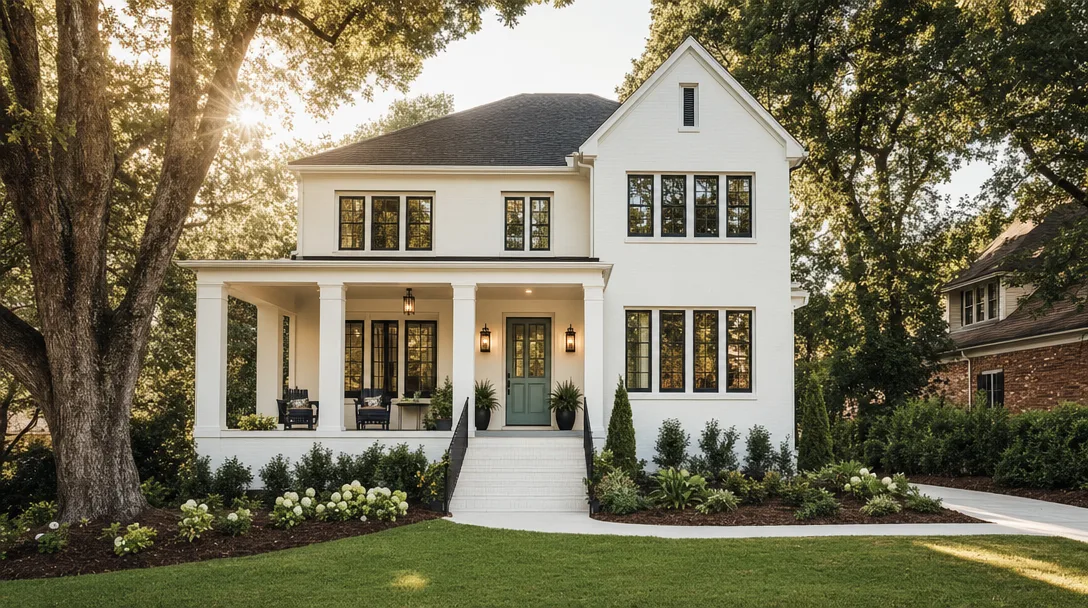
Curb appeal is the first thing a buyer sees, and it sets the tone for the entire showing. If the exterior looks neglected, buyers assume the interior is neglected too. If it looks well-maintained, they walk in with a positive mindset. There is no published ROI figure for it, but it is the cheapest set of improvements on this list.
- Fresh paint on the front door. A bold but tasteful color like navy, black, or a warm red sets the tone for the whole property. Cost: $20 for a can of paint and an afternoon.
- New mulch in all flower beds. This is cheap and transforms the look of a property. Cost: $100 to $300 depending on the size of your beds.
- Trimmed landscaping. Cut back overgrown bushes, trim trees away from the house, and edge the lawn. Cost: $200 to $500 if you hire a landscaper.
- Power wash the driveway, walkway, and siding. This removes years of grime in a few hours. Cost: $150 to $400 if you hire it out.
- Update exterior light fixtures. New front porch lights and garage lights cost $100 to $300 each and make a huge difference in the evening curb appeal.
- Add potted plants by the front door. A simple pair of urns with seasonal plants costs $75 to $200 and instantly makes the entrance feel welcoming.
Total curb appeal investment: $500 to $2,000. In our experience, homes that look loved from the street draw more showings, and more showings mean more offers. That is not a number we can source from a report; it is the pattern we have watched across hundreds of listings.
Lighting Updates: No Published ROI
Lighting is one of the most overlooked elements of a home's presentation. Outdated brass or gold fixtures instantly date a home, and dim, warm bulbs can make rooms feel dark and small. Replacing outdated fixtures with modern brushed nickel, matte black, or chrome finishes is a relatively inexpensive upgrade that changes how every room photographs and feels.
Focus on the high-impact areas: the entryway chandelier, kitchen fixtures, bathroom vanity lights, and dining room. Swap out switch plates and outlet covers while you are at it. A new switch plate costs $2 and makes a room look finished. Budget $500 to $1,500 for a whole-house lighting update.
One more tip: use brighter bulbs. Many homes are under-lit. Replacing 60-watt equivalent bulbs with 100-watt equivalent LEDs (in appropriate fixtures) makes rooms feel larger and more welcoming. It is a $50 investment that changes the entire feel of a home.
Flooring Replacement: No Published ROI
Flooring is one of the most visible features of a home, and worn or dated flooring can be a dealbreaker for buyers. There is no published ROI figure for it, but the costs are well known, and the choices are usually clear.
Here is our rule of thumb: if your existing flooring is in good condition but just dated, consider refinishing hardwood floors instead of replacing them. Refinishing costs $3 to $5 per square foot. If your floors are carpet and the carpet is stained or worn, replace it with a neutral, mid-grade carpet at $3 to $5 per square foot installed. If you are replacing old vinyl or tile with luxury vinyl plank (LVP) or engineered hardwood, expect to spend $5 to $8 per square foot.
The one case where we strongly recommend replacing flooring: if you have carpet in bathrooms or kitchens. That is a red flag for buyers. Replace it with LVP or tile. Otherwise, mid-grade carpet in bedrooms and LVP in common areas is a safe, appealing choice for the NW Metro Atlanta market.
Deck and Patio Improvements: No Published ROI
Outdoor living space matters in Georgia. We have the weather for it, and buyers in 2026 consistently rank outdoor space as one of their top priorities. A deck or patio extends the livable square footage of a home without the cost of an addition.
If your existing deck is in good structural condition but looks tired, a power wash and a fresh stain or seal costs $200 to $500 and can transform the space. If you need to build a new deck, expect to spend $5,000 to $15,000 depending on size and materials.
If you have a patio, consider adding a pergola or an outdoor ceiling fan to make the space feel more like an outdoor room. These are relatively inexpensive upgrades that add perceived value. A screened porch is the gold standard for outdoor living in Georgia, and it is a major project, so only take it on if you plan to enjoy it before listing.
HVAC and Energy Efficiency: No Published ROI
Energy efficiency has become a bigger selling point in 2026 as utility costs have risen. Buyers are asking about HVAC age, window efficiency, and insulation. While these upgrades do not have the visual impact of a kitchen refresh, they can be important negotiating points.
If your HVAC system is more than 15 years old, consider replacing it. A new HVAC system costs $5,000 to $10,000. More importantly, it eliminates a common inspection objection. Buyers and their agents look at the age of the HVAC, and a system past its expected life is a red flag that can stall or sink a sale.
Adding attic insulation and sealing air leaks are low-cost improvements that improve energy efficiency and comfort. Blown-in attic insulation costs $1,000 to $2,500 and can pay for itself in utility savings before you even sell. Window replacement is more expensive ($500 to $1,500 per window), so we only recommend it if the existing windows are truly failing, as we covered above.
Professional Staging: No Published ROI
Staging is one of those investments that is hard to measure in strict ROI terms because it does not show up as a line item on the settlement statement. We label it honestly: no published ROI. But staged homes sell faster, and staging helps buyers see a home as their own instead of as your furniture arrangement.
At Team Haigh, we are Certified Staging Specialists. We help every seller prepare their home for the market, whether that means rearranging existing furniture, bringing in rental pieces, or simply decluttering and depersonalizing. The goal is the same: help buyers see themselves living in the space. For a deeper look, see our guide to professional home staging.
Professional cleaning is non-negotiable. A deep clean before listing costs $300 to $600 and is the best money you will spend. It ensures the home shows well from the first showing to the last. We include professional photography and walkthrough videos with every listing, and we always recommend that the home be professionally cleaned before those photos are taken.
What Buyers in NW Metro Atlanta Actually Want in 2026
We have been in the trenches of the NW Metro Atlanta market for 360-plus transactions, and we track buyer preferences closely. Here is what the data from our showings, buyer feedback, and closed sales tells us about what buyers in this market are actually looking for in 2026.
- Updated kitchens (not necessarily renovated): Buyers want a kitchen that looks clean, modern, and functional. Painted cabinets, new hardware, updated countertops, and modern fixtures are enough. You do not need a full renovation.
- Open floor plans: The demand for open, connected living spaces continues. If your home has a wall between the kitchen and family room, consider whether it can be removed. If not, focus on making the flow feel as natural as possible through furniture placement and staging.
- Good school zones: This is the single biggest driver of home values in NW Metro Atlanta. Homes in the Walton, Lassiter, Pope, Harrison, Hillgrove, Kennesaw Mountain, Woodstock, and Cherokee High clusters command a premium. Buyers will pay more for a smaller home in a better school zone.
- Move-in ready condition: With rates where they are in late 2026, buyers do not have extra cash for major renovations after closing. They want a home they can move into this weekend. The homes that sell fastest are the ones that look like someone just finished cleaning them.
- Outdoor living space: Decks, patios, screened porches, and fenced yards are high on the priority list. Georgia's climate allows for outdoor living most of the year, and buyers have come to expect it.
- Dedicated home office space: Remote and hybrid work is here to stay. A room that can serve as a home office, even a small one, is a major selling point. If you have a spare bedroom or a flex space, stage it as an office.
- Energy efficiency: Updated HVAC, double-pane windows, and smart thermostats signal that the home has been well-maintained and will cost less to operate. These features are increasingly important to buyers in 2026.
For a deeper look at what the market is doing right now, read our 2026 NW Metro Atlanta housing market report and check our market statistics page for the latest numbers.
The Cost of Doing Nothing: How Much Money Sellers Lose by Not Preparing Their Home
This is the section that gets our sellers' attention. Because the cost of doing nothing is real, and it is bigger than most people think. Let us walk through the math using real FMLS data from our market.
In Q2 2026, homes in Cobb County that sold within the first 14 days of listing averaged 98 percent of their original list price. Homes that sat on the market for 30 to 60 days sold for an average of 93 percent of their original list price. That is a 5 percent difference. On a $450,000 home, that is $22,500.
What causes a home to sit? The most common reasons are overpricing, poor presentation, and deferred maintenance. Homes that are not properly prepared for the market do not attract the same level of interest. They get fewer showings, fewer offers, and lower offers when they do come in.
We have seen this play out dozens of times. Two comparable homes in the same neighborhood go on the market at the same time. One is priced right, staged, and professionally photographed. It goes under contract in 10 days at 98 percent of list price. The other is priced slightly higher, not staged, with dated photos. It sits for 45 days, drops the price twice, and eventually sells for 93 percent of the original list price.
The difference is not just the $22,500 in sale price. It is also the carrying costs. Every month that a home sits on the market, the seller is paying the mortgage, utilities, insurance, and HOA dues. On a $450,000 home with a $300,000 mortgage at 6.5 percent, the monthly carrying cost is roughly $2,500. Three extra months on the market costs $7,500.
And then there is the psychological cost. A home that sits on the market becomes stigmatized. Buyers wonder what is wrong with it. The listing agent starts getting calls from other agents asking if the seller is motivated. It becomes a negotiation disadvantage.
The math is clear: spending $5,000 to $15,000 on the right pre-sale improvements can prevent a $22,500 price reduction and a $7,500 carrying cost penalty. That is a 150 to 450 percent return on your investment. Doing nothing is the most expensive choice you can make.
For a complete walkthrough of the selling process from start to finish, see our complete guide to selling options and our full Georgia selling guide.
Team Haigh's Pre-Sale Consultation: What We Do and How We Help
This is where we earn our keep. When you sit down with Campbell and Beth Haigh for a pre-sale consultation, we do not just tell you what your home is worth. We walk through your home room by room and tell you exactly what to do, and what NOT to do, before listing.
Our pre-sale consultation includes a full walkthrough of your property, inside and out. We look at the condition of the kitchen, bathrooms, flooring, paint, lighting, windows, HVAC, roof, and landscaping. We identify every item that will come up in a home inspection so you can address it proactively. And we give you a prioritized list of improvements ranked by return on investment.
We also provide a net sheet that shows you exactly what you can expect to walk away with after closing costs, based on the real numbers in today's market. No guesswork, no inflated estimates. Calculate your net proceeds from the sale to see what you will actually walk away with. We want you to know the math before you make any decisions.
For sellers who want the full-service experience, our traditional listing includes professional staging consultation, professional photography and videography, AI-enhanced listing copy, syndication across 50-plus platforms, targeted digital advertising, and full negotiation support. We also offer a AI-powered marketing strategy that gives your listing an edge in search results and social media.
If you are not ready to commit to a traditional listing, we also offer a free no-obligation consultation where we walk through your home and give you our honest assessment. We do not pressure you to sign a listing agreement. We want you to have the information you need to make the best decision for your family.
And if you are weighing your options between selling strategies, our complete seller's guide covers every approach from traditional listing to cash offer to home trade-in, so you can choose the path that fits your situation.
Ready to Find Out What Your Home Is Worth?
Campbell and Beth Haigh have helped 360-plus families sell their homes across NW Metro Atlanta. We would love to walk through your home, tell you exactly what to do (and what NOT to do), and give you a realistic picture of what your home will sell for in today's market. No pressure, no obligation.
Frequently Asked Questions About Increasing Home Value Before Selling
Which home improvement has the highest ROI before selling?
According to the National Association of Realtors 2025 Remodeling Impact Report, a new steel entry door recovers about 100 percent of its cost at resale, the highest of any project in the report. A fiberglass entry door recovers about 80 percent, vinyl windows 74 percent, wood windows 71 percent, a kitchen remodel about 60 percent, a primary suite addition 54 percent, and a bathroom renovation 50 percent. A pool addition recovers about 43 percent, from NAR's 2018 Remodeling Impact Report, since the 2025 report does not list pools among its top cost-recovery projects.
Is a full kitchen remodel worth it before selling?
A complete kitchen renovation and a minor kitchen remodel both recover about 60 percent of their cost, per NAR's 2025 data. That is why we usually recommend the minor remodel: the same recovery on a much smaller spend. Painting cabinets, updating hardware and fixtures, and refreshing the backsplash gives most kitchens the lift they need without the $30,000 to $60,000 price tag of a gut renovation.
Should I add a swimming pool before selling?
Almost never. NAR's Remodeling Impact Report data puts a pool addition at about 43 percent, from the report's 2018 edition, since the 2025 report does not list pools among its top cost-recovery projects. A $50,000 in-ground pool would recover roughly $21,500 at sale on average. Families with young children see a safety hazard, empty nesters see maintenance costs, and the Georgia pool season is not year-round. If you already have a pool, keep it clean and well-maintained; just do not add one as a pre-sale investment.
Do new windows pay for themselves at resale?
Wood window replacement recovers about 71 percent of its cost and vinyl about 74 percent, per NAR's 2025 Remodeling Impact Report. Because windows cost $500 to $1,500 each, we only recommend replacement if the existing windows are truly failing, with fogged glass, broken seals, or rotted frames. Otherwise, spend your money on the higher-recovery projects on this list.
What is the ROI on painting before selling?
Painting has no published ROI figure in NAR's 2025 report, so we label it honestly: no published ROI. That said, a whole-house interior paint job runs $2,000 to $5,000, and fresh, neutral paint is the cheapest way to make a home feel move-in ready. It changes how every room photographs and shows, and we recommend it to nearly every seller.
Which improvements have no published ROI?
NAR's 2025 Remodeling Impact Report does not publish single cost-recovery figures for interior paint, curb appeal, lighting, flooring, decks, or HVAC. We label those honestly as no published ROI. They still matter, but as presentation and care items that shape buyer perception rather than measured investments. Any agent who quotes you a clean percentage for one of them is guessing.